
Original editorial illustration of the music workflow.
Key takeaways
- Choose the collection that makes the strongest listening experience before trying to reach a particular track count.
- Track count and total runtime affect store classification, and distributor guidance can describe different rules for different services.
- A shorter release still needs finished audio, accurate metadata, artwork and a realistic promotion plan.
- Use Suno V6 or WaveQuake to develop the songs, then judge the collection by what listeners will actually hear.
In this article
- Separate format labels from creative scope
- Calculate the actual listening commitment
- Give every song a reason to belong
- Estimate the work that grows with the tracklist
- Develop a collection with WaveQuake deliberately
- Keep permissions and release records clear
- Plan promotion around a song and a story
- Approve the collection before delivery
- Frequently asked questions
The EP vs album decision is partly about format and mostly about whether the songs belong together. Five focused recordings can make a stronger introduction than a longer collection padded with near-duplicates. An album can be the right choice when its additional songs deepen the experience rather than merely increase the count.
For an AI-assisted project, generating more candidates is not the same as finishing a larger release. This guide separates store classification from the creative and practical decisions, with a worksheet for sequencing, release preparation and choosing what to leave out.
Separate format labels from creative scope
An EP is generally understood as a shorter collection, while an album offers a longer listening experience. The labels shown by stores are not simply a field you can use however you like. They can depend on track count, duration and the service receiving the release.
Amuse's format guide gives a general four-to-six-track EP range with a runtime condition, then describes a different Spotify treatment beginning at six tracks. That distinction is a reason to confirm the intended stores and distributor preview rather than treating one rule as universal.
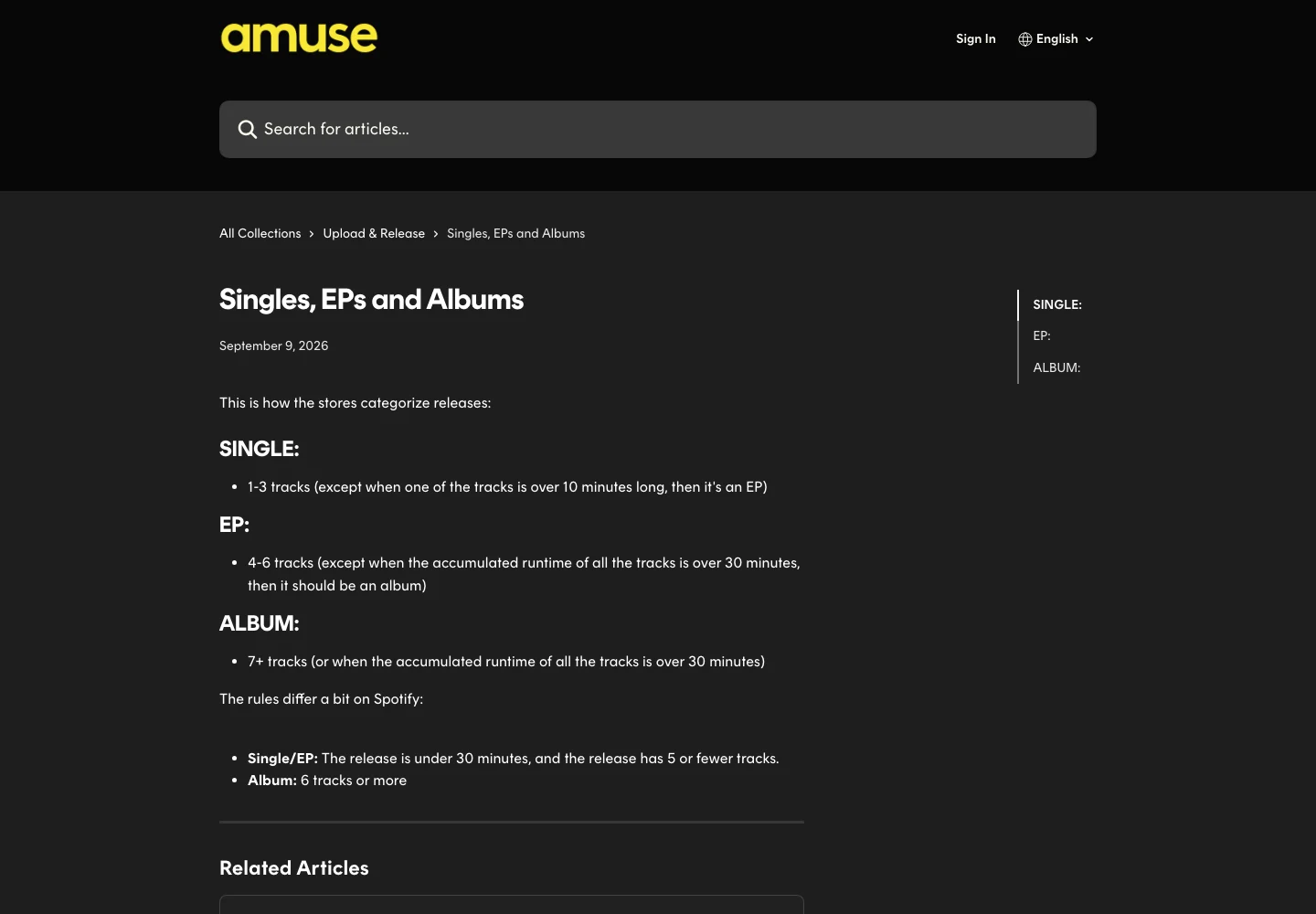
Amuse guidance showing service-specific single, EP and album classifications. Public-page capture, 19 November 2026. Source.
Do not add “EP” or “Album” to metadata merely to force a label. Check the distributor's current delivery guidance for your release. Our AI release guide explains the surrounding delivery process, and the metadata and ISRC guide covers recording identity.
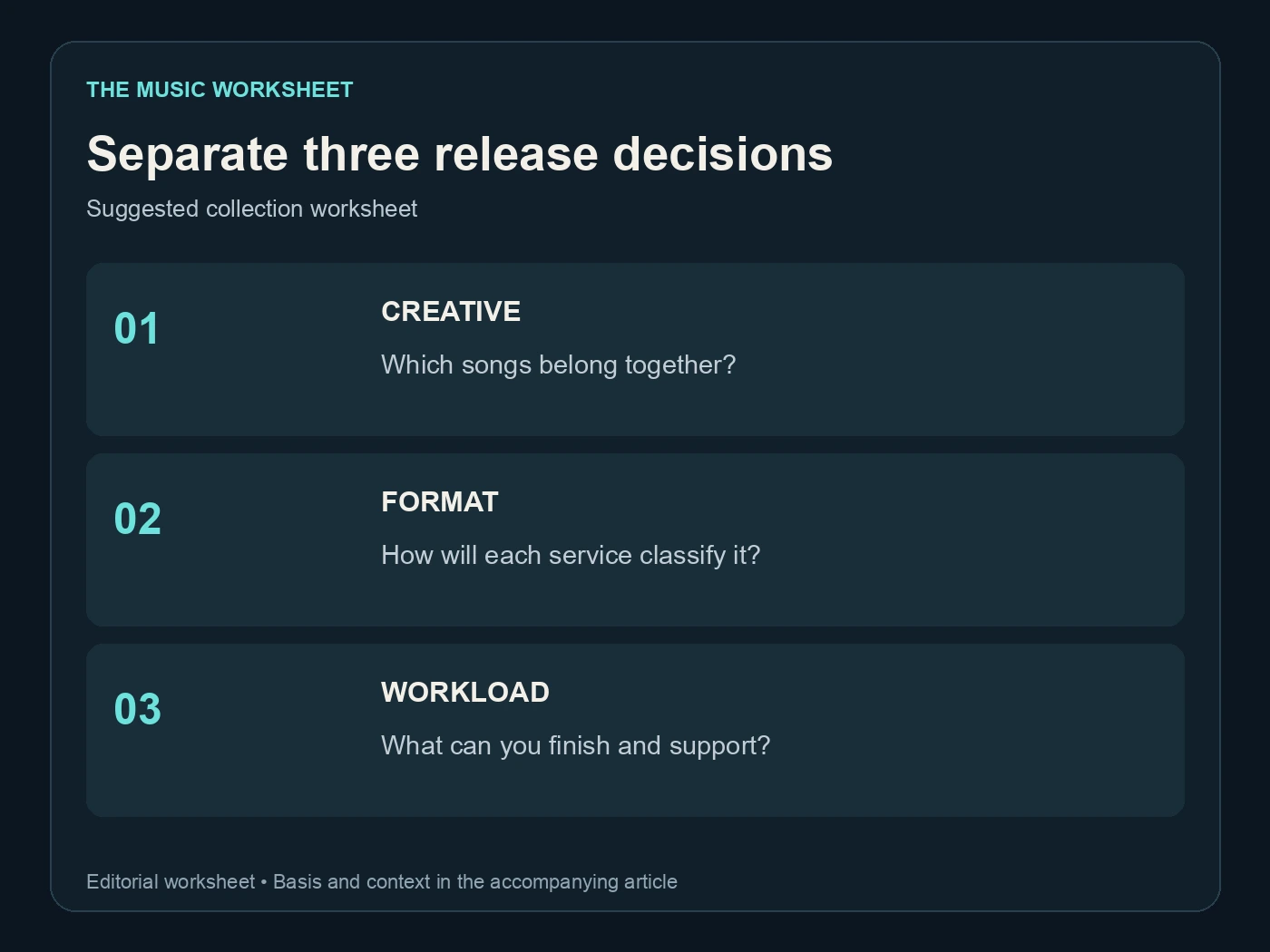
Separate three release decisions. Suggested collection worksheet. See the article for the basis.
Use three separate questions: what belongs together, how the service classifies it and what you can support after launch. Answering only the second question can produce a technically valid package with no clear reason for a listener to spend time with it.
Calculate the actual listening commitment
Add the final exported durations rather than the lengths requested in your prompts. Introductory silence, extended outros and alternate versions all affect the actual running time. Keep the arithmetic visible in a simple release sheet.
| Illustrative collection | Tracks | Assumed length per track | Calculated runtime |
|---|---|---|---|
| Compact introduction | 4 | 3:00 | 12:00 |
| Focused short collection | 5 | 3:30 | 17:30 |
| Longer sequence | 8 | 3:30 | 28:00 |
| Extended collection | 10 | 4:00 | 40:00 |
These examples compare listening commitments; they do not declare a universal store classification. The eight-track example remains a larger tracklist even though its total runtime is under half an hour.
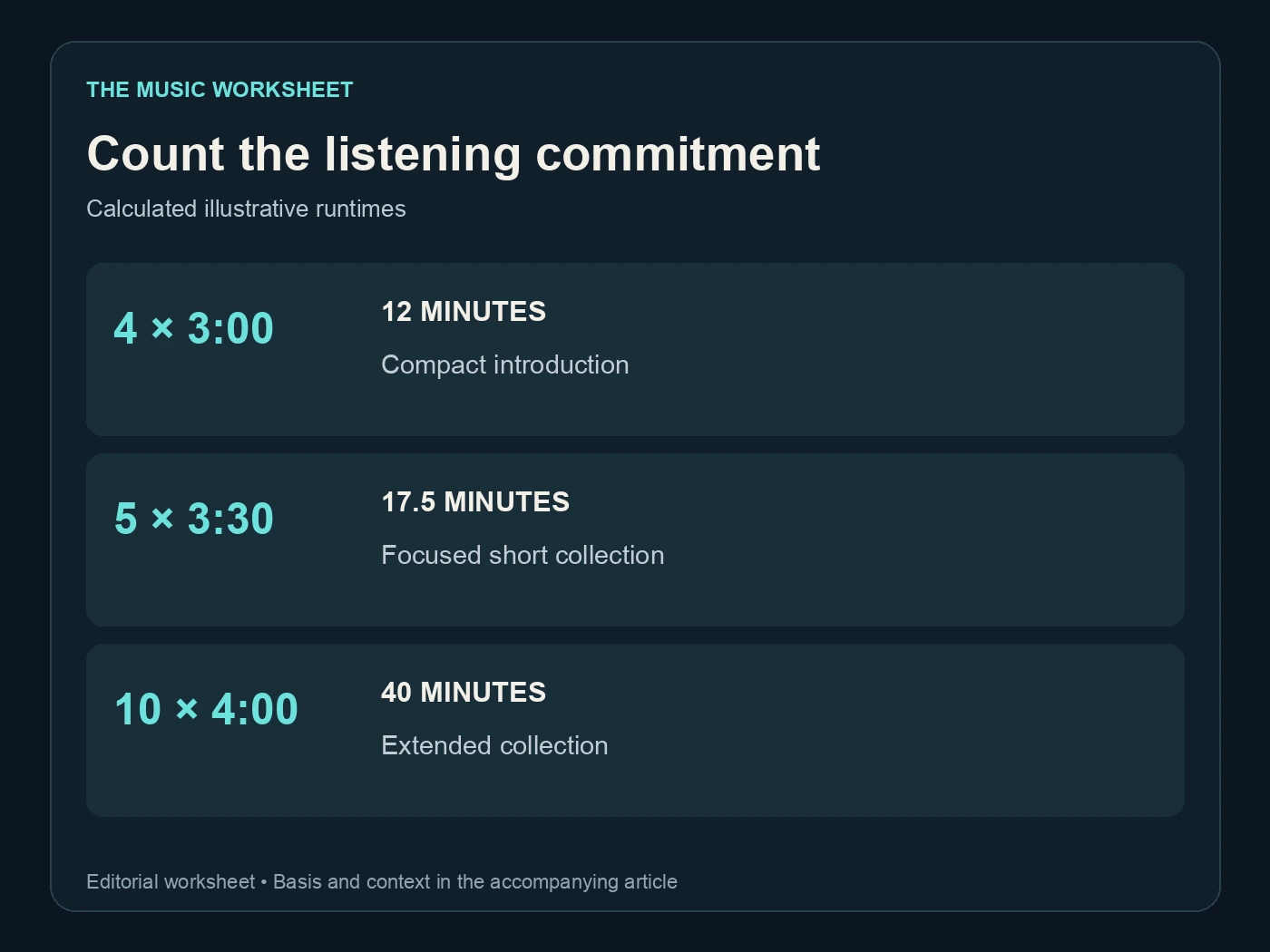
Count the listening commitment. Calculated illustrative runtimes. See the article for the basis.
Now listen to the sequence without interruption. Does the fourth song add a new perspective? Does the eighth earn its place? Runtime is easy to calculate, but attention is earned through the songs and the way they follow each other.
If the collection feels long, first remove repetition rather than shortening every track. One unnecessary song can be more distracting than a deliberate long ending on the right song.
Give every song a reason to belong
Write a one-sentence role for each candidate. One might introduce the musical world, another change the energy and another resolve the central theme. If several songs have the same role and similar arrangements, compare them directly and choose the strongest.
A collection does not need a rigid narrative to feel coherent. Shared lyric concerns, a recognisable vocal direction or a consistent production palette can connect otherwise varied songs. The useful test is whether the differences feel intentional.
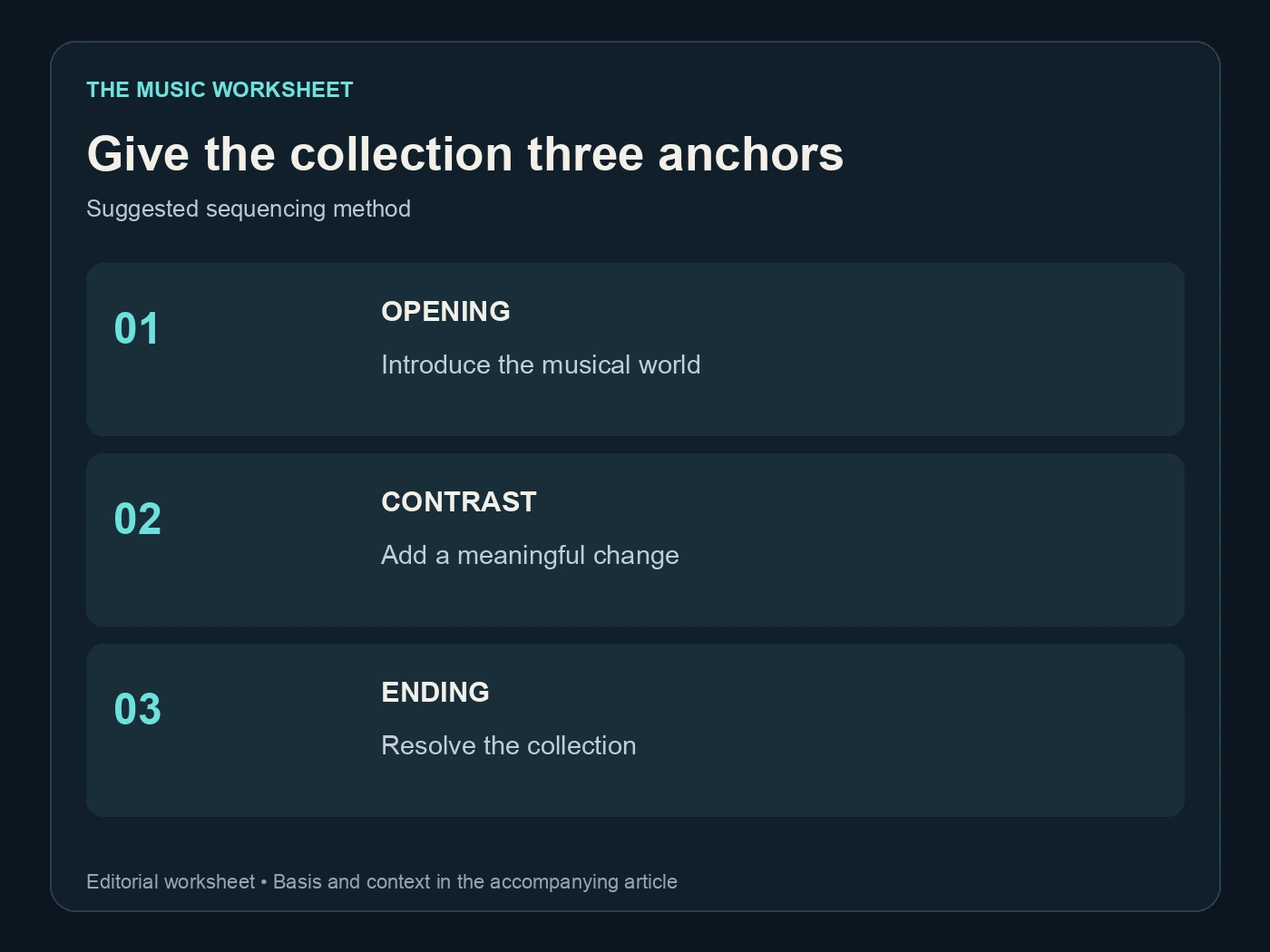
Give the collection three anchors. Suggested sequencing method. See the article for the basis.
The suggested sequence worksheet has three anchors: opening, contrast and ending. Arrange the remaining songs around those anchors, then listen again. Do not assume the first song you created should open the release or that the newest recording should close it.
Keep alternate versions outside the main sequence until you know why the audience would want them. A different generation of the same song might be useful as a bonus or a later comparison, but it can weaken the identity of the main collection if both versions compete for attention.
Our audience-building guide is useful here: a clear reason to listen is easier to communicate than a large number of files.
Estimate the work that grows with the tracklist
Each additional recording needs more than an export. It needs a complete listening review, consistent credits, a final filename and a place in the release sheet. A larger collection multiplies those checks even when generation itself is fast.
| Illustrative preparation model | 5 tracks | 10 tracks |
|---|---|---|
| Full-song audio reviews, 2 per track | 10 | 20 |
| Metadata rows, 1 per track | 5 | 10 |
| Approved delivery files, 1 per track | 5 | 10 |
| Short song descriptions, 1 per track | 5 | 10 |
This is a suggested planning model, not an estimate of hours or a guarantee of release quality. Some recordings need several revisions; others may already be ready. Use the table to identify work you might otherwise forget.
Keep collection-level tasks separate: artwork, release description and the overall sequence do not double automatically with the track count. Conversely, one difficult vocal repair can consume more time than several straightforward metadata checks.
If the longer tracklist exceeds your available attention, release the coherent smaller collection. Save the remaining songs for a later project with its own purpose instead of treating postponement as wasted work.
Develop a collection with WaveQuake deliberately
WaveQuake can support the songwriting stage through lyrics and musical direction. Its music creation page describes comparing returned song versions. Use those alternatives to choose a performance that fits the collection, not as an obligation to release every result.
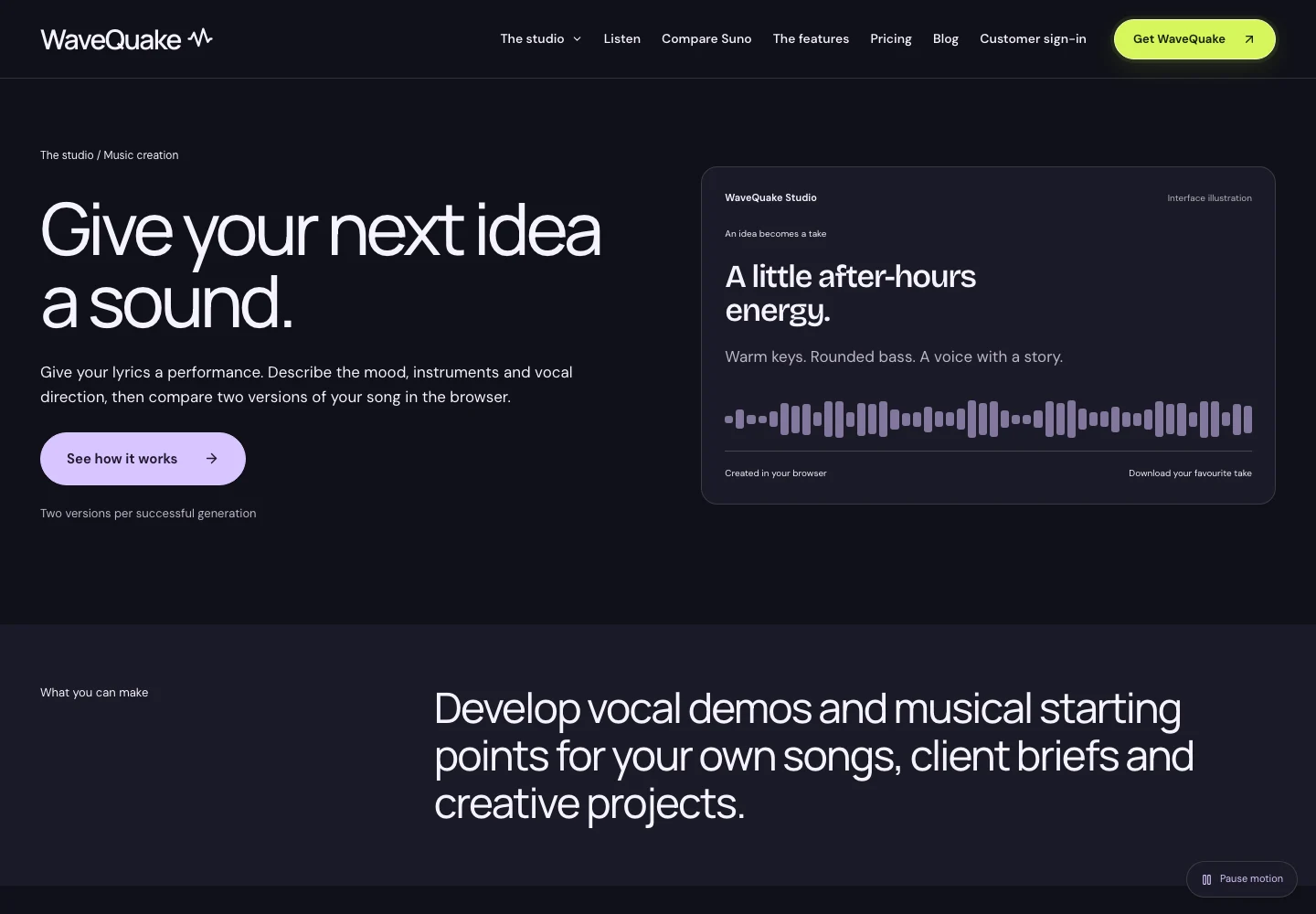
Lyrics to Song AI — Create Music from Your Words | WaveQuake. Public-page capture, 19 November 2026. Source.
Keep a shared brief for the project: lyrical perspective, musical palette and intended emotional range. Then give each song one distinction. That combination can create continuity without making every arrangement sound like the same template.
The current WaveQuake pricing page describes the offer and account limits. Review those directly when planning production; the number of ideas you can explore does not decide how many songs your audience should receive.
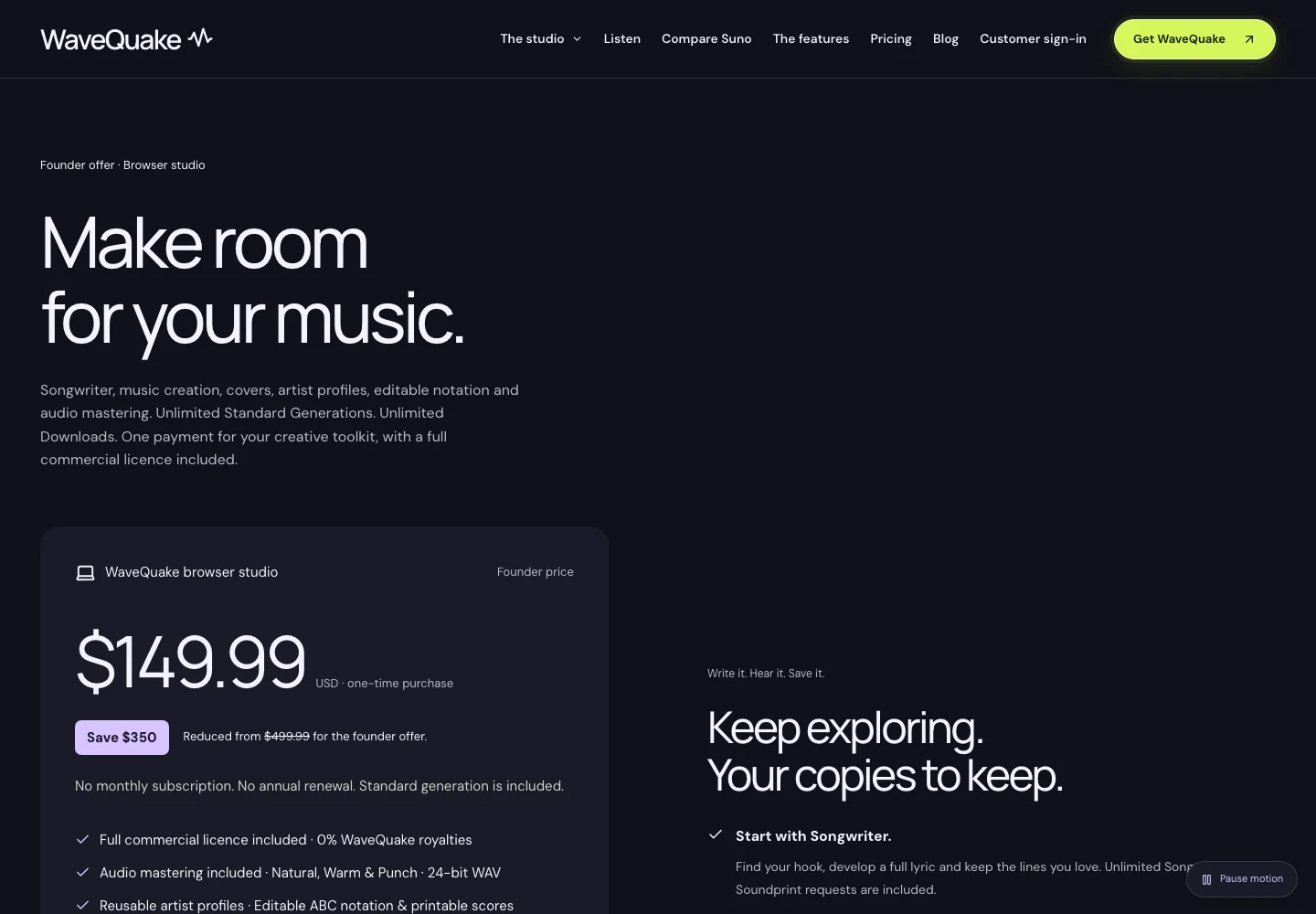
One-time browser studio pricing | WaveQuake. Public-page capture, 19 November 2026. Source.
Our WaveQuake review provides more context. For a mixed Suno V6 and WaveQuake project, compare the finished recordings at a comfortable, similar playback level. Differences in generation workflow matter less to the sequence than a sudden change in vocal character, brightness or arrangement density that you did not intend.
Keep permissions and release records clear
Save the terms and permissions relevant to the material you supplied and the tools you used. A generated recording can still involve an uploaded reference, a collaborator's lyric or a recorded voice that needs separate permission. Keep those records with the project rather than relying on memory months later.
WaveQuake's commercial-use page is the product's reference for its offer. Read it for the intended use and keep your own contribution and permission records. A promotional description should not replace checking the conditions that apply to the actual project.
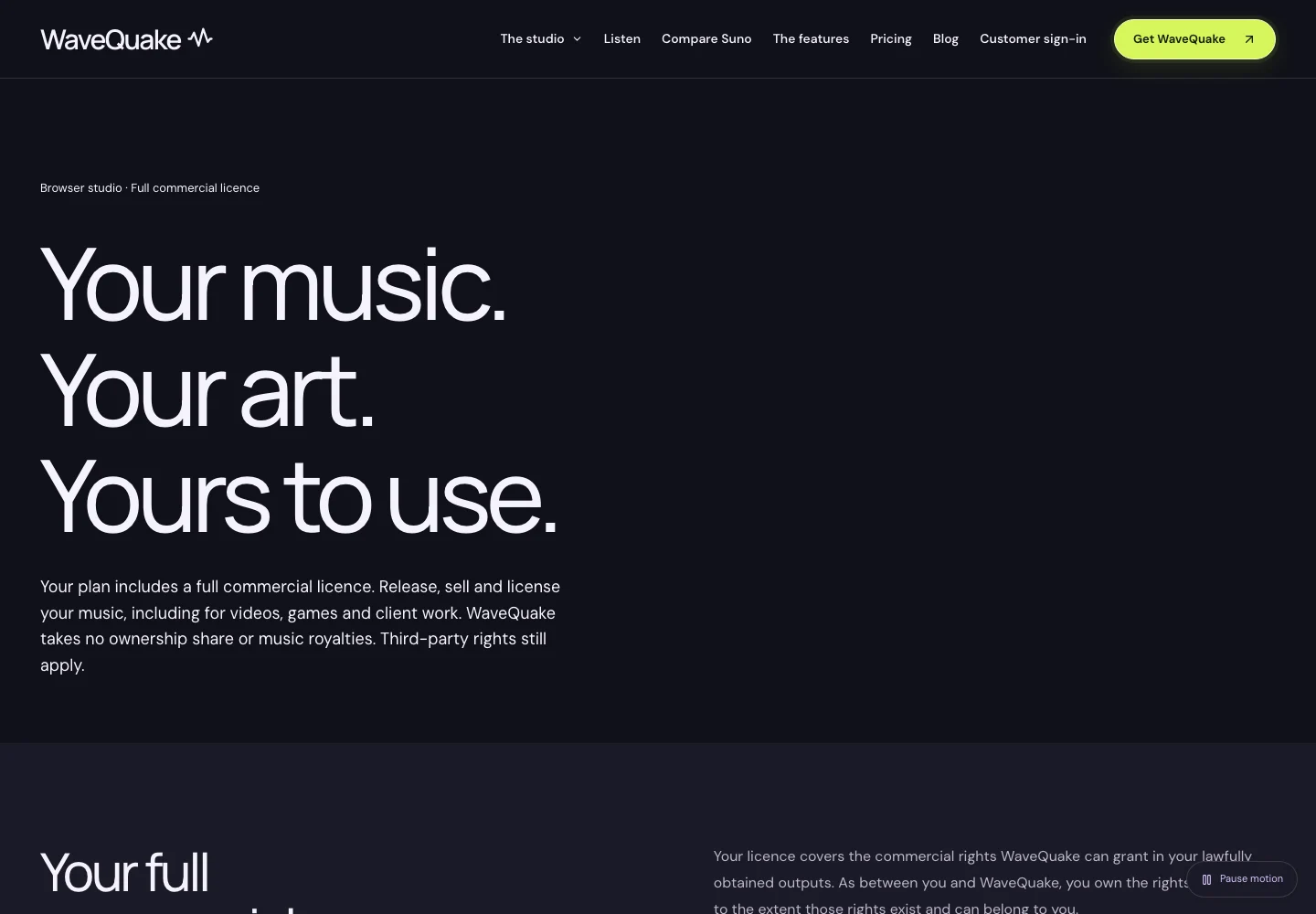
Full commercial licence for your music | WaveQuake. Public-page capture, 19 November 2026. Source.
Track which recordings are new and which have appeared before. If a previously released song joins the collection, confirm the appropriate recording identifiers and metadata with your distributor. Do not create a new identity merely because the same recording now sits beside different tracks.
Our Suno download and release-planning guide covers another practical concern: having the files you need before the deadline. The release sheet should point to approved local exports, not just browser pages or unreviewed previews.
Plan promotion around a song and a story
A collection gives you several possible entry points, but a listener still needs a clear first invitation. Choose the song that best introduces the project and explain what makes the collection worth hearing. An announcement that lists only the number of tracks says little about the experience.
Spotify's editorial-pitching guide describes the route for upcoming unreleased songs. Check the current requirements and delivery timing early. A press announcement, a distributor upload and an editorial pitch are separate actions.
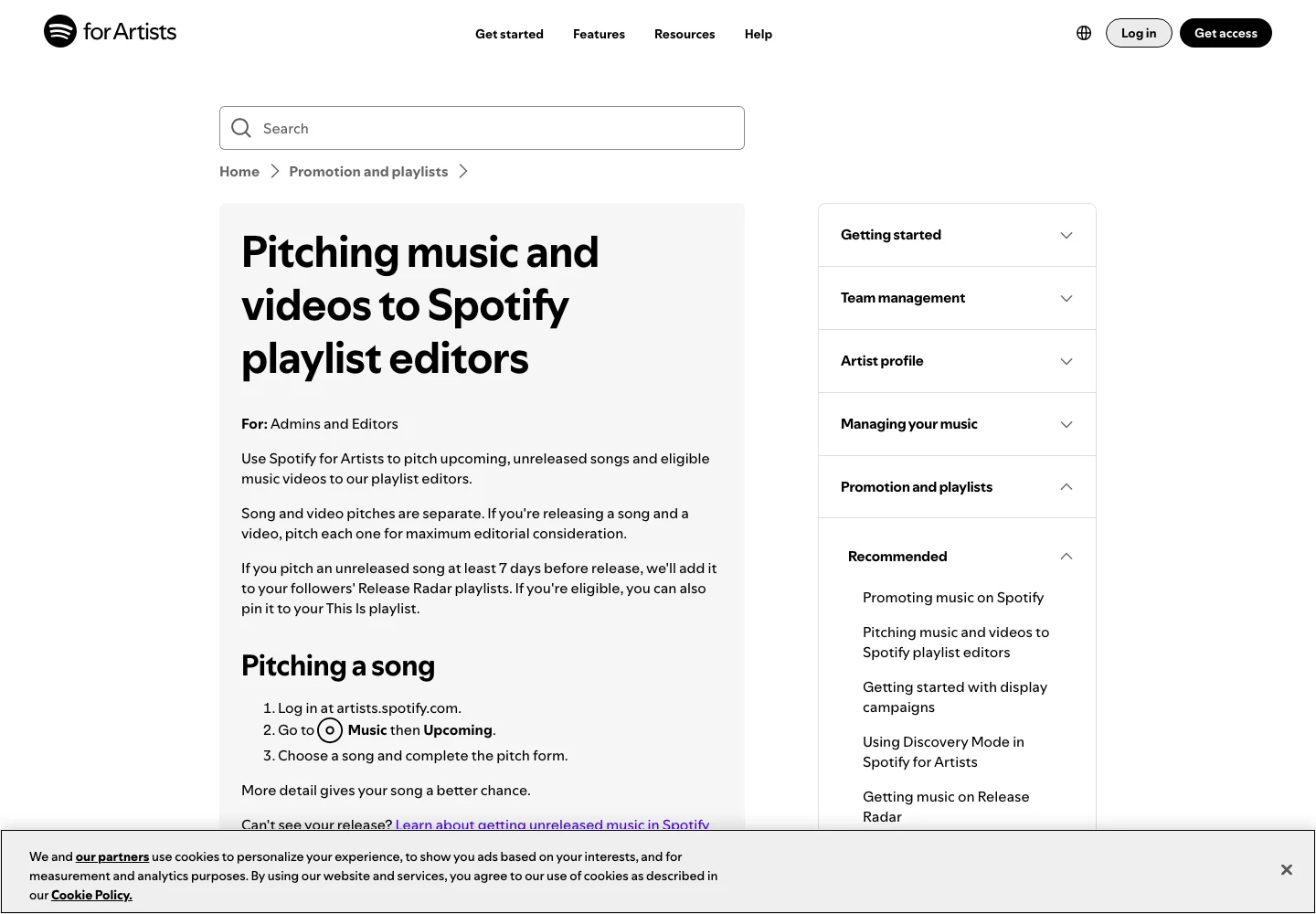
Pitching music and videos to Spotify playlist editors - Spotify. Public-page capture, 19 November 2026. Source.
Write a short paragraph about each song while the decisions are fresh. Describe the theme, arrangement or production choice without inventing chart results, listener reactions or external endorsements. Those notes can later support the release page and individual posts.
Use a schedule you can maintain after the launch date. A five-song EP with a clear introduction and continued attention may be more manageable than an album whose promotion ends after one announcement. No format guarantees streams or revenue; the practical choice is the one you can finish and present convincingly.
Approve the collection before delivery
Review the entire sequence from the actual delivery files. Check transitions, silence, loudness differences and whether the ending leaves the intended impression. Individual tracks can pass their own checks while the sequence still feels uneven.
For AI recordings with remaining artifacts, Undetectr is an option to evaluate during final preparation. Preserve the selected originals and listen again after processing. Check the collection as a whole, because a changed texture on one song can affect how it sits beside the others.
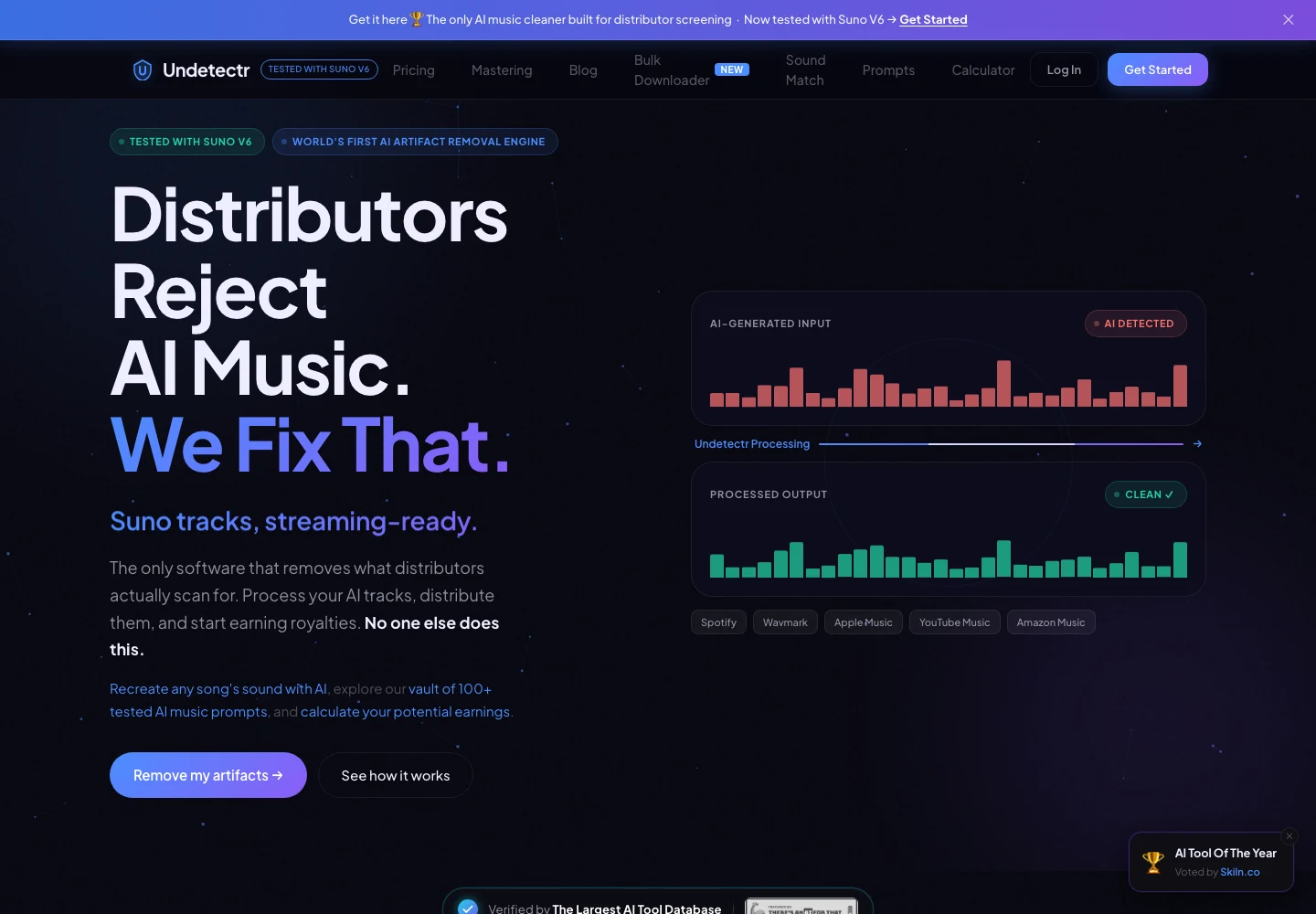
Undetectr — Make AI Music Undetectable. Public-page capture, 19 November 2026. Source.
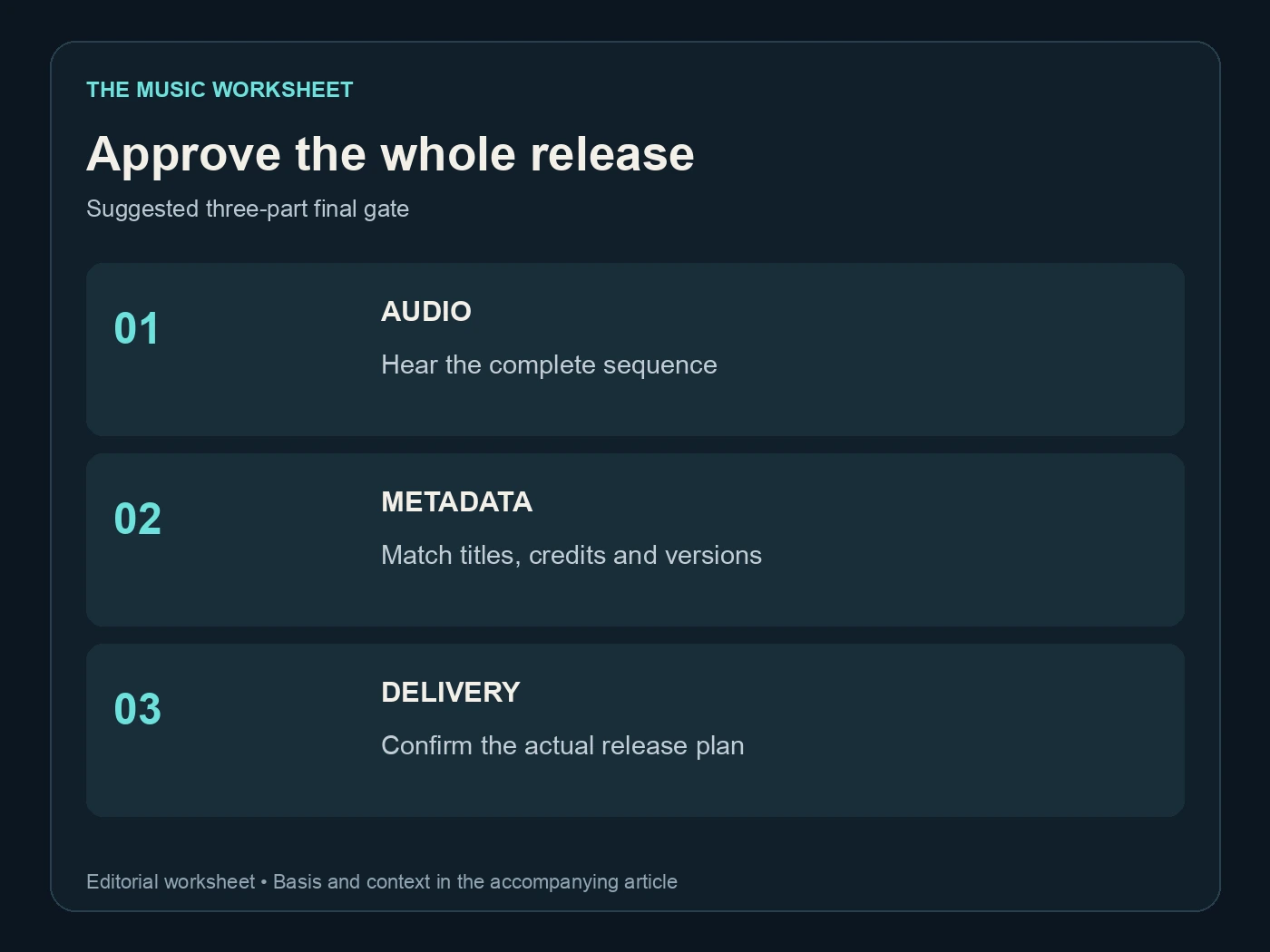
Approve the whole release. Suggested three-part final gate. See the article for the basis.
The suggested final gate has three parts: approved audio, accurate metadata and a confirmed delivery plan. Keep a clear record of the exact versions submitted. If a song changes after approval, review its place in the sequence again rather than silently replacing the file.
Choose EP or album because the collection earns that shape. The strongest release is the one where each recording has a purpose, the practical work is complete and the listener has a reason to continue from the first song to the last.
Related reading
- Release AI music
- AI music metadata and ISRCs
- Build an audience for AI music
- WaveQuake review
- Suno download caps and release planning
Frequently asked questions
What is the difference between an EP and an album?
An EP is generally a shorter collection and an album a larger one, but store labels depend on specific track-count and duration rules. Check your distributor's current guidance for the services receiving the release rather than assuming one threshold applies everywhere.
Can six songs be an EP?
The answer depends on the service, total duration and delivery guidance. Amuse's current help page describes a general EP range and a different Spotify threshold. Confirm the expected display with your distributor before finalising the package.
Should a new AI artist release an EP first?
A focused EP can be manageable, but it is not automatically the best choice. Consider the strength and coherence of the songs, the preparation work and the promotion you can sustain. A single or a fully developed album may suit a different project.
Does generating many songs mean I have an album?
It means you have candidates. An album requires selection, sequencing and complete delivery preparation. Remove redundant versions and judge whether every song adds something useful to the listening experience before deciding the collection is ready.
Can I combine Suno and WaveQuake songs on one release?
Build the project around recordings whose use is permitted and whose musical character fits the collection. Review the relevant terms, supplied-material permissions and distributor requirements. Then compare the actual exports for coherent sound, credits and sequencing.
Should I release alternate versions on the same collection?
Only when they add a clear reason to listen. An alternate can provide a meaningful contrast, but near-duplicates may weaken the main sequence. Consider keeping them as separate bonus material or developing a later release with its own purpose.